
Van Security Plates: Internal vs External Protection Explained

If you have already added hooklocks to your van, it is easy to assume the doors are fully protected. In reality, an additional lock and a security shield do different jobs.
A hooklock adds another locking point. A shield protects selected vulnerable areas around the van’s original latch or mechanism. On some vehicles, using both can create a much stronger layered setup than relying on either one by itself.
At JS Van Locks, we normally assess the vehicle, door design, previous damage and known vulnerable areas before deciding whether internal protection, external plates or a combination is appropriate.
What are van security plates and shields?
Van security plates and shields are vehicle-specific protective components fitted around vulnerable areas of a door. Their purpose is to make it harder to reach or manipulate the factory locking mechanism through the outer door skin.
They are not the same as a deadlock or hooklock. A shield does not create another independent locking point; instead, it protects the mechanism the van already relies on.
This is why we often pair shielding with additional hooklocks when the vehicle and customer requirements justify both.
Why protect the factory latch area?
Some van break-ins involve puncturing or drilling the outer door skin in an attempt to reach the factory latch or release mechanism. We do not publish exact attack locations or bypass instructions, but the general principle matters when choosing the right defence.
If the original latch can be reached through the bodywork, adding a lock elsewhere on the door does not automatically protect that vulnerable mechanism. Vehicle-specific shielding is designed to reinforce selected areas and restrict access to the components behind the skin.
Internal latch shields: discreet protection behind the door skin
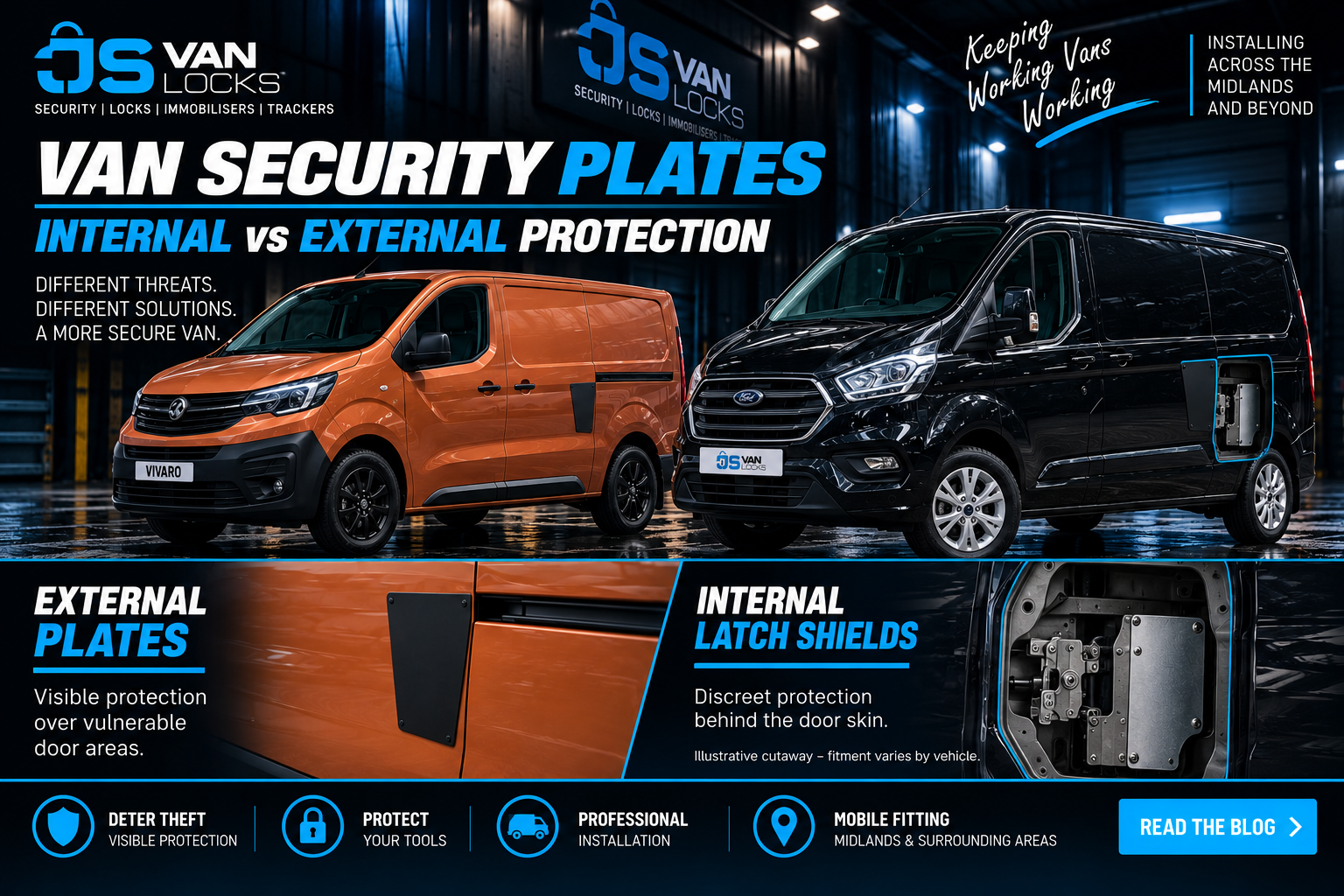
An internal latch shield is fitted inside the door, around a selected factory mechanism. Because it sits behind the outer panel, it keeps the exterior of the van looking largely standard.
At JS Van Locks, suitable internal latch shielding is often our preferred starting point when it addresses the known vulnerable area. It provides protection where it is needed without automatically adding an external plate to the bodywork.
Benefits can include:
Protection positioned behind the outer door skin.
A discreet exterior appearance.
Vehicle- and door-specific fitment around selected latch mechanisms.
Compatibility with other security products where the fitting kit allows it.
The exact shield shape and fitting location vary by vehicle. A part used on one generation of Transit Custom, Vivaro or Vito should not be assumed to fit another model.
External security plates: visible protection over vulnerable areas
External plates are fitted to the outside of the door over selected vulnerable areas. They provide a visible layer of protection and can help make puncture or drilling attacks harder by adding material over the area being targeted.
Our external shielding options are vehicle-specific and available in different finishes where supported, including black powder-coated protection and stainless-steel options.
External plates can make sense when:
The customer wants visible protection as a deterrent.
The correct vehicle-specific kit uses an external component.
Previous attack damage needs covering after the door has been assessed and repaired appropriately.
The known vulnerable area is best protected by an external or combined shielding solution.
External shielding is not only for repairing damage. It can be fitted preventively, as we did on the blue 2026 Ford Transit in our Leicester case study after the customer described repeated break-ins on previous vans.
Internal vs external van shielding: which is better?
There is no universal winner. The better option is the one that protects the relevant mechanism on your specific van and works with the other security already fitted.
A simple way to think about it is:
Internal shield: discreet protection behind the panel.
External plate: visible protection over the vulnerable exterior area.
Combined kit: external and internal components used together where the manufacturer specifies both.
We generally prioritise internal protection when it solves the problem cleanly, but we do not rule out external plates when they are the correct solution for the van or the customer’s circumstances.
Do external plates replace hooklocks?
No. They protect different things.
A plate or shield helps protect the factory mechanism and selected vulnerable areas. A hooklock adds an independent mechanical locking point operated separately from the central locking system.
If a factory latch is compromised, an engaged hooklock can still provide another physical barrier. Equally, a hooklock does not make every area of the outer door skin resistant to drilling or puncturing.
For customers carrying tools, we often assess the two together rather than treat them as competing products. Our hooklocks vs deadlocks vs slamlocks guide explains the locking side in more detail.
What about door peeling?
Shielding and anti-peel protection are also different products.
A latch shield protects selected mechanism areas. An anti-peel kit reinforces vulnerable door edges against being pulled or bent away. Where compatible, a high-position hooklock can also add restraint higher up the door.
If your concern includes both mechanism access and peeling, the final recommendation may involve more than one layer. We check compatibility before quoting rather than stack products together blindly.
Vauxhall Vivaro external plate example
The Vivaro shown in our cover illustrates the external-plate approach: a black plate mounted on the sliding side door over the relevant vulnerable area. The plate remains visible from outside, so it also acts as a clear sign that additional door protection has been fitted.
Plate size, shape and position are vehicle-specific. The image is illustrative of the style and purpose; final fitment is confirmed against the actual van.
Transit Custom internal shielding example
The Transit Custom cutaway in the cover is an illustrative view showing how an internal shield can sit behind the door skin around the latch area. It is not a photograph of a removed section of a customer’s van.
The important point is placement: the shield is designed around the vulnerable mechanism, not simply fitted to any convenient part of the door.
Our lock-position guide explains why fitting position and vehicle generation matter across additional door-security products.
Should you use internal shields on every van?
Not automatically. A shield only makes sense where a suitable product exists for the vehicle and it protects a relevant vulnerable area.
Before fitting, we consider:
Make, model and generation.
Side-door, barn-door or tailgate configuration.
Existing locks and shielding.
Previous attacks or repairs.
Racking, lining or camper conversions that affect access.
The customer’s priorities and budget.
We also avoid promising that any plate or shield makes a van theft-proof. The purpose is to make unauthorised access harder and protect selected vulnerable areas as part of a layered setup.
Can shielding be fitted after a break-in?
Often, yes, but the damaged door needs assessing first.
An external plate can sometimes cover a repaired attack area while adding further protection. However, it should not be used to hide structural damage that still needs proper repair.
Tell us what happened and send photographs before booking. That allows us to check the door condition, existing holes or repairs, and the compatible protection for that vehicle.
How much do van security plates cost?
Pricing depends on the type of shield, finish, number of doors and the exact vehicle. Rather than duplicate prices here and let them go stale, our van-security cost guide contains the current VAT-inclusive figures and examples.
A useful quotation should state which doors are covered, whether the protection is internal or external, the finish, fitting and any additional security products included.
What would JS Van Locks recommend?
For a tool-carrying van, we look at the complete door rather than sell a plate in isolation.
That can mean suitable hooklocks for independent locking, internal shielding around a vulnerable factory mechanism, anti-peel protection where the door design benefits from it, or an external plate where that is the right solution.
The aim is not to fit the longest list of products. It is to understand how the van is likely to be attacked and protect the relevant areas with compatible equipment.
Mobile van shielding installation across the Midlands
JS Van Locks provides mobile van-security installation across the Midlands, including Leicester, Derby, Swadlincote, Burton upon Trent, Tamworth and surrounding areas, with wider travel available for suitable jobs and fleets.
For a quotation, send your registration, fitting postcode, door layout, existing security and photographs of any previous damage. We will confirm the appropriate shielding and explain what each part of the proposed setup is designed to protect.
No security product guarantees that a vehicle cannot be broken into or stolen. Final product compatibility and fitting positions are confirmed for the individual vehicle before installation.


Comments